Geometry Dash: The Foundation of a Gaming Phenomenon
Released in 2013, Geometry Dash introduced a platforming experience that combines electronic music, fast obstacle courses, and straightforward controls that require precise timing. Rather than focusing on expansive worlds or complex missions, the game centers on guiding a character through challenging paths, where each jump depends on careful observation and reactions that depend on precise timing.
This approach has inspired various versions of the series, along with a wide range of content created by the community. Among them, Geometry Dash Lite offers a more accessible way to explore the core gameplay, introducing familiar mechanics and musical challenges in a simpler format.
Geometry Dash Lite: The Core Experience Behind Its Popularity
An Overview of the Lite Edition
As a free entry point into the wider Geometry Dash series, the Lite edition offers a glimpse into a style of platforming shaped by electronic music, continuous movement, and precise timing. You guide a geometric cube across a path filled with spikes, deep gaps, and shifting obstacle patterns, where each jump calls for careful judgment. A small miscalculation may lead to a restart, turning the journey into a gradual process of observation, adjustment, and discovery.
Beneath its straightforward controls lies a challenge that develops through familiarity rather than complex inputs. Recognizing level layouts, anticipating upcoming hazards, and finding the right moment to jump gradually become central to the experience. The music adds another layer to this process, offering a sense of rhythm that can help you interpret the pace of each section while navigating its obstacles.
Much of the appeal comes from the relationship between repetition and progress. A failed attempt may reveal a poorly timed jump or an obstacle that requires closer attention, giving the next run a slightly different purpose. Over time, repeated encounters can turn unfamiliar sequences into recognizable patterns, although maintaining accuracy across an entire level still calls for concentration and patience.
This underlying design also offers a useful starting point for exploring the broader range of games inspired by the series. Through alternative perspectives, visual styles, and environmental designs, these adaptations can reinterpret familiar platforming ideas while preserving the emphasis on rhythm, timing, and learning through repeated attempts.
.avif)
Figure 1. A cube ready to jump into action
Inspiration: When Everyday Life Becomes an Obstacle Course
The idea of a journey filled with obstacles can come from something almost everyone has experienced: days when everything seems to move too fast.
One morning, you rush out of the house, make your way through crowded streets, try to finish your work on time, and then tackle a seemingly endless list of small tasks. Some decisions take only seconds to make, yet their consequences can stay on your mind for a long time. Sometimes, even careful preparation cannot prevent a mistake. Other times, being just one beat too late means missing an opportunity.
From this perspective, the obstacles in the game can represent situations we encounter in everyday life. A spike appearing unexpectedly reflects a problem you never saw coming. A gap that forces your character to jump at the right moment resembles a decision you cannot put off forever. A stretch filled with consecutive obstacles mirrors those periods when multiple challenges seem to arrive all at once.
The journey in Geometry Dash Lite goes beyond reaching the finish line, encouraging you to handle pressure, recognize patterns, and refine your skills with every attempt. These elements draw parallels between the challenges within the game and everyday life, where patience, adaptability, and learning from mistakes can gradually lead to progress.
The Story
Extending the idea of life's challenges as an obstacle course, the story follows a small geometric cube as it travels along an endless path filled with unfamiliar terrain and unexpected obstacles.
In a geometric world filled with floating platforms, deep gaps, and glowing obstacles, the cube has no idea what lies ahead. It has only one choice: keep moving forward and discover places it has never reached before.
The journey seems simple at first, but it quickly becomes more difficult as gaps appear more frequently and obstacles grow more complex. Sometimes, the cube jumps too early. Other times, it reacts a beat too late, forcing it to start over.
However, every failure helps it understand the path a little better. By observing, memorizing, and adjusting its jump timing, the cube gradually discovers the patterns needed to overcome challenges that once seemed impossible.
This story captures the core spirit of the game: success comes not only from quick reflexes but also from persistence and the ability to learn from mistakes. Every restart is not a return to square one, but another step forward with more experience and a better chance of reaching the finish line.
Gameplay
The gameplay revolves around continuous forward movement, leaving you to focus on the obstacles ahead and determine the right moment to react. Each level introduces combinations of spikes, gaps, jump pads, and other structures, calling for different approaches to timing and movement as the challenge unfolds.
Instead of constantly adjusting your character's direction, you mainly focus on when to jump. This mechanic makes the controls accessible while putting the emphasis on observation and memorization. Jump too early, and your character may hit an obstacle. React a beat too late, and it may fall into the gap ahead.
Memorization alone is not enough. You still need to watch the screen, adjust your jump timing, and stay focused until you overcome the entire challenge. This balance between reflexes, rhythm and learning is what gives the game its distinctive identity.
Mastering each challenge takes practice, patience, and precise timing. For more gameplay highlights, useful tips, and exciting moments from a variety of games, visit the YouTube channel to explore more videos and discover new gaming experiences.
Controls
One of the advantages of this version is its minimalist control system:
-
PC: Press Space, the Up Arrow key, or the left mouse button to jump, depending on the version.
-
Touchscreen devices: Tap the screen to jump over obstacles.
Even with just one main action, you still need to judge when to jump, how close the obstacles are, and the rhythm of each section. Beginners can start by studying the level layout, remembering the obstacles that frequently cause failures, and practicing the more difficult sections one at a time.
The Journey Through Geometry Dash Lite
Stereo Madness: Getting Started With the First Challenges
Stereo Madness welcomes you into the colorful geometric world, introducing the rhythm challenges that await as you take your first steps through the game. From the beginning, you control a cube that automatically moves forward, avoiding spikes, gaps, and other obstacles by timing your jumps precisely. The straightforward controls help beginners ease into the game, while finishing the level takes concentration and precise timing.
What makes Stereo Madness engaging is the way it introduces challenges that gradually increase in difficulty within a single level. With each attempt, you begin to memorize obstacle positions, recognize the distance needed for each jump, and coordinate your actions with the music. This is an important first step toward building your reflexes and preparing for the next levels in the series.
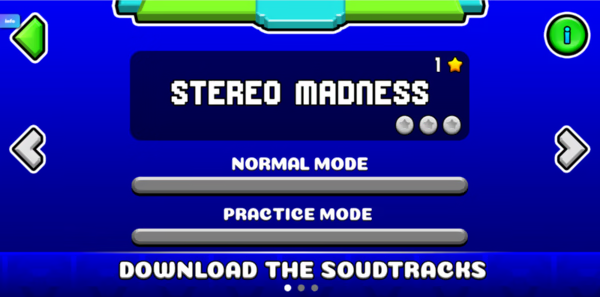
Figure 2. Start your journey with rhythmic jumps
Back on Track: Discovering a New Jump Mechanic
Back on Track takes you to the second level, where the skills learned in Stereo Madness come into play as you navigate familiar spikes and gaps while learning to use Jump Pads to clear obstacles. When the cube touches one, it is launched into the air, giving you a way to clear certain obstacles without having to perform the entire jump manually.
The introduction of Jump Pads makes observing the terrain and preparing for upcoming obstacles even more important. You need to understand how the pads affect your movement trajectory while timing your next jumps to avoid collisions. As a result, Back on Track not only reinforces previously learned skills but also helps you become familiar with new mechanics.
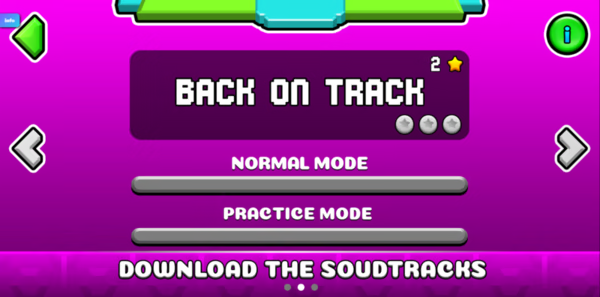
Figure 3. Test your timing while dodging obstacles
Geometry Dash Lite 3D: Bringing Familiar Challenges Into 3D Space
In 2026, Geometry Dash Lite 3D introduces a fresh experience for fans of rhythm platformers looking to explore new gameplay perspectives. Rather than completely changing the formula behind the original game, this 3D version takes a different approach by bringing the obstacle course into a three dimensional visual environment, allowing you to experience greater depth and distance between objects.
3D Visual Style
The most noticeable difference between 2D and 3D presentation is the sense of depth.In a 3D environment, perspective gives platforms a greater sense of depth and dimension. Objects farther away may appear smaller, and judging the distance between your character and an obstacle can become more difficult at a glance.
A three dimensional environment offers a fresh perspective on familiar platforming challenges. Instead of viewing geometric shapes and obstacles on a flat plane, you may need to pay closer attention to their positions in space and how the perspective changes as your character moves forward.
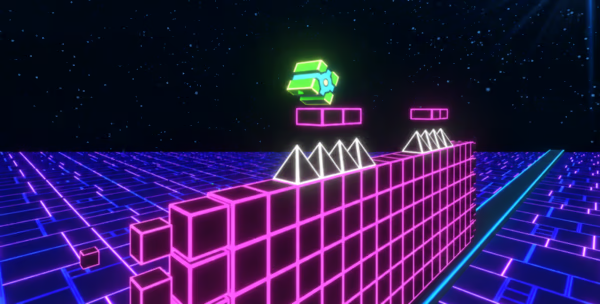
Figure 4. A 3D visual style
Combining Reflexes With Spatial Awareness
If music and rhythm help you recognize when to act in Geometry Dash Lite, a 3D environment can introduce another factor: interpreting visual information while moving.
You need to focus on the path ahead, identify dangerous areas, and choose the right moment to jump. As the perspective changes continuously, careful observation can be just as important as quick reflexes. A rushed decision can sometimes lead to failure, while taking an extra moment to understand the layout may help you make a more accurate move.
What Can You Explore on Geometrydashlite3d.com?
About the Website
Geometrydashlite3d.com offers an online gaming space for fans of rhythm platformers and geometric obstacle challenges. The website aims to provide a convenient entertainment space where you can explore geometric gameplay, sharpen your reflexes, and take on levels that demand precision.
One notable feature of the platform is its use of the .com domain extension, one of the most widely recognized extensions across the internet. According to a study on domain extension trust published by Atom.com in November 2025, .com ranked first among the seven extensions surveyed in terms of brand trustworthiness. This highlights the familiarity and positive brand perception associated with .com.
By adopting .com, the platform benefits from a familiar website address that visitors can recognize and remember more easily. Combined with its focus on browser gaming, this domain choice supports a consistent online identity and helps build recognition among its target audience.

Figure 5. A trusted and reliable online gaming platform
What Does the Gaming Platform Offer?
The website features a collection of games centered around the Geometry Dash series, along with a wide range of related titles for fans of challenges that test reflexes and obstacle courses. You can explore different gameplay styles, from familiar rhythm jumping levels to games that require precise timing, route memorization, and accurate making decisions. This variety helps the website cater to both beginners and gamers looking for more demanding challenges.
What Gets Updated Regularly?
The platform continuously refreshes its game library with titles updated daily, making it easy for you to discover new entertainment options directly in your browser. From trending hits to newly released games across various genres, every visit offers a chance to find another exciting experience.
Here are some notable games you can explore on the website:
Play Slope 3 and guide a rolling ball across a futuristic 3D track packed with sharp turns, dangerous red obstacles, and thrilling challenges.
Geometry Dash Retray mixes green and black geometric visuals with an 8 bit inspired style, rhythm-driven obstacles and fast paced character changes.
Geometry Dash Slow takes you through a challenging platforming adventure packed with shifting forms, gravity switches, obstacles and three hidden coins.
Geometry Dash Grief leaves little room for mistakes as you navigate tight and sudden changes in movement. Can you stay focused to overcome every obstacle?
Every second counts in Subway Surfers! Sprint through the subway, leap over barriers, slide past hazards, and use smart moves to keep your coin hunt going.
Geometry Dash 3D takes geometric challenges into a world with depth and perspective. Read the course, anticipate hazards and sharpen your jumping skills.